Loading...
Serving Hemet, CA and surrounding areas. (951) 484-2581
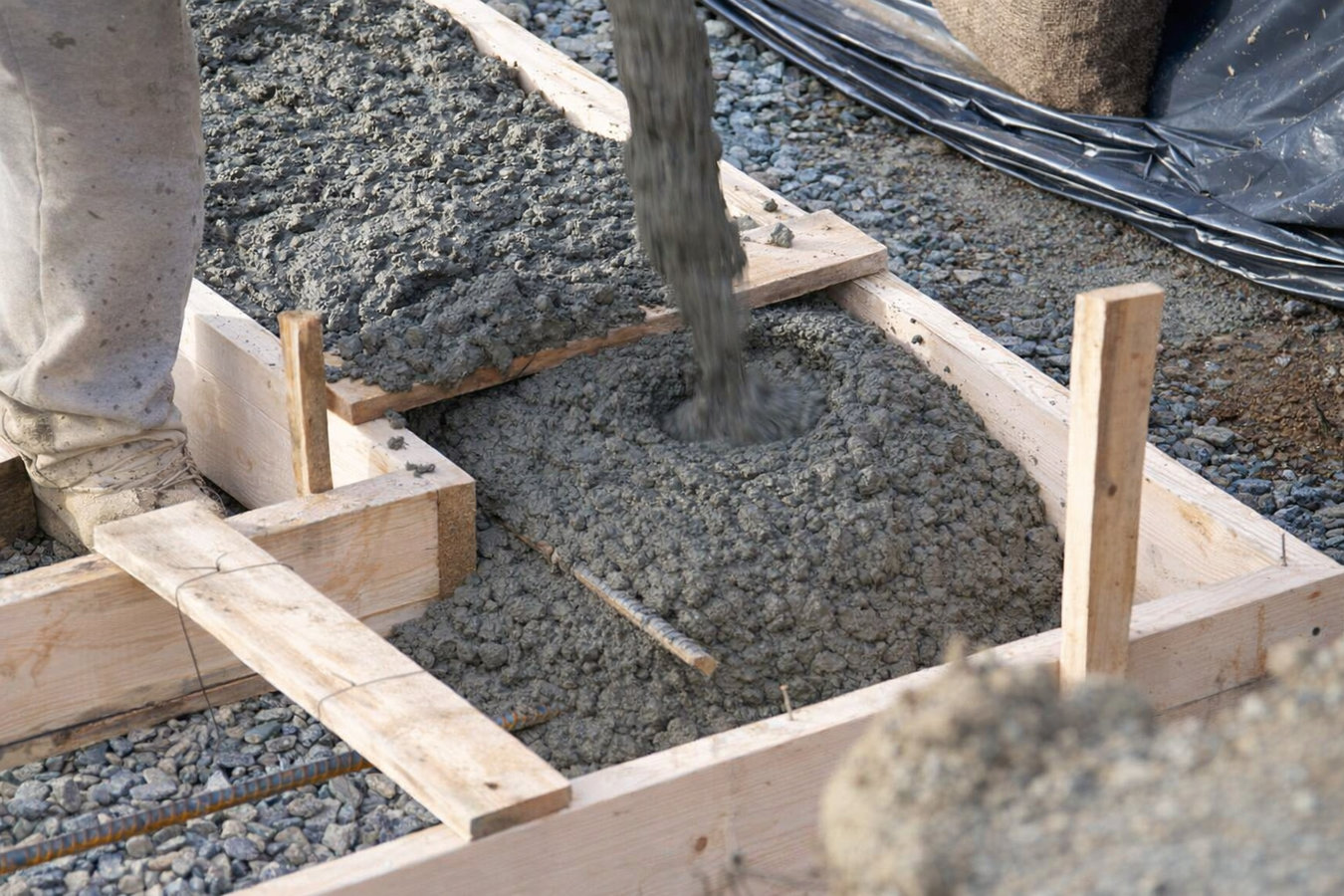
The footing is what everything else depends on. We pour concrete footings in Hemet that are dug to stable soil, reinforced for seismic conditions, and permitted through the City of Hemet so your project is protected.
Concrete footings in Hemet are the underground base that holds up additions, decks, patio covers, and new structures by spreading weight onto stable soil below the shifting clay layer - most residential footing projects take one to three days of active work, with a curing period of at least seven days before the next construction phase begins.
If you are planning a room addition, a new garage, a patio cover, or an accessory dwelling unit, footings are the first thing that gets built - and the part that determines whether the structure stays level for decades or starts showing cracks and settling within a few years. Hemet's clay-heavy soils and proximity to the San Jacinto Fault make proper footing depth and steel reinforcement more important here than in many other parts of Southern California.
Footings are also the piece that must be inspected before they are covered up with concrete. That is why permitting is not optional here. Homeowners adding a structure and also needing a full foundation installation can coordinate both phases with us from the start.
Cracks that run diagonally from the corners of windows or doors are one of the most common signs that the ground underneath has shifted. In Hemet, this kind of movement is frequently caused by the clay soil expanding and contracting through the wet and dry seasons. A crack that was small last year and is noticeably wider this year deserves a professional look before it gets worse.
When the ground under a structure moves, the frame above it moves too - and doors and windows are usually where you notice it first. If a door that used to swing freely now drags on the floor, or a window will not latch, the structure may have shifted off its original level. This is especially common in older Hemet patio covers and room additions built on minimal footings.
Any new structure attached to your home - or a freestanding one like a garage, workshop, or ADU - needs proper footings before anything else is built. Skipping this step or using undersized footings is the most common reason additions fail or get flagged during a home sale inspection. If you are planning to build, footings are the first conversation to have.
If a home inspection or title search reveals that an addition or structure was built without permits, the footings are often the first thing a city inspector will want to verify. In Hemet, unpermitted work is common enough in homes from the 1970s and 1980s that this situation comes up regularly during real estate transactions. Getting the footings assessed early can keep a deal from falling apart at the last minute.
We handle the full footing process from permit application through the final inspection. For most projects in Hemet, that means submitting the application to the City of Hemet Building Division, scheduling the pre-pour inspection with a city inspector, and coordinating the excavation and pour so the whole sequence moves on a predictable timeline. We dig to the depth specified on your permit drawings - and in Hemet's clay soil, that often means going deeper than the minimum to reach stable ground. Steel reinforcing bars are installed in every footing we pour because the San Jacinto Fault runs through this region and California's building standards require seismic reinforcement here. If you are also planning to pour a full slab foundation on top of the footings, we can coordinate both phases so you are not managing two separate crews.
For hot-weather pours - which are unavoidable if your project runs from June through September - we schedule excavation and pouring for early morning, use additives that slow the initial set, and apply a curing compound immediately after the pour to keep moisture in the slab while it cures. The foundation installation service picks up where footings leave off if your project requires a full foundation wall or grade beam above the footing base.
For room additions, patio covers, ADUs, and attached garages on single-family homes in Hemet and surrounding areas.
For freestanding decks, workshops, pergolas, and accessory structures that need a stable, permitted base.
For homes with older unpermitted additions where the existing footings need to be evaluated and potentially upgraded to current standards.
A significant share of Hemet's housing stock was built between the 1960s and 1990s, and many of those homes have had patio covers, additions, or outbuildings added over the years - sometimes without permits, and sometimes on footings that were undersized to begin with. When property owners today want to expand or repair those structures, the first question is usually what is underneath. The clay-heavy soils across much of the San Jacinto Valley compound the problem: footings that were too shallow or too narrow to begin with have been pushed around by seasonal soil movement for years. Homeowners in Beaumont and Banning deal with the same combination of older housing stock and expansive soils, and we work in both areas regularly.
The City of Hemet's permit process for footings requires a city inspector to sign off on the open trench and steel placement before any concrete is poured - meaning there is a third-party check built into every permitted job. That inspection step protects homeowners: if the footing depth or steel layout does not meet the permit drawings, it gets corrected before it is buried underground and impossible to fix without tearing everything out. The American Concrete Institute sets the national standards for how footings should be designed and poured - standards that local inspectors use during their reviews.
We respond within 1 business day and schedule a site visit before giving you a price. Hemet's soil conditions vary enough that a phone estimate is not reliable. We assess the ground, confirm what you are building, and give you a written estimate that separates labor, materials, and permit fees.
We submit the building permit application to the City of Hemet on your behalf. This typically takes a week to two weeks depending on the project type and city workload. We track it and keep you updated - you do not need to follow up with the building department yourself.
The crew digs to the depth required by your permit drawings - often deeper than the minimum in Hemet's clay soil. Once the trench is ready, steel reinforcing bars go in before any concrete is poured. A city inspector must visit and approve the trench and steel before the pour can proceed.
After inspection approval, we pour early in the morning during summer to avoid the worst of the heat. A curing compound is applied right after finishing. The concrete needs at least seven days before anything is built on top - we give you a specific date and a clear explanation of what comes next.
We visit your property first and handle the permit process start to finish.
(951) 484-2581We submit the application, coordinate the pre-pour inspection with the City of Hemet, and get the sign-off you need. You do not have to manage city hall, and you end up with documentation that protects you when you sell.
In the San Jacinto Valley, minimum depth is often not deep enough for the clay soils that move with every wet-dry cycle. We assess the soil before we quote and design the footing depth for what is actually under your yard.
Every footing we pour includes steel reinforcing bars sized to the permit drawings. Hemet is in a seismically active region near the San Jacinto Fault, and that reinforcement is what keeps the footing intact when the ground moves. Contractors who leave it out to cut costs are putting your structure at risk.
We have completed footing projects across Hemet, Beaumont, Banning, and the wider Inland Empire. That local track record means we know the City of Hemet permit process, the local soil conditions, and what inspectors in this area look for at the pre-pour review.
Every footing project starts with a site visit and ends with a city-inspected, permitted pour. Before you hire any contractor, you can verify their license on the California Contractors State License Board website - it takes about two minutes and confirms they are legally authorized to do this work in California.
When footings have settled unevenly, foundation raising corrects the level and stabilizes the structure before further damage spreads.
Learn moreFull foundation installation for new construction and major additions, coordinated with the footing work that supports it from below.
Learn morePermit slots and inspection appointments fill up - reach out now and we will lock in your project before the next busy season starts.