Loading...
Serving Hemet, CA and surrounding areas. (951) 484-2581
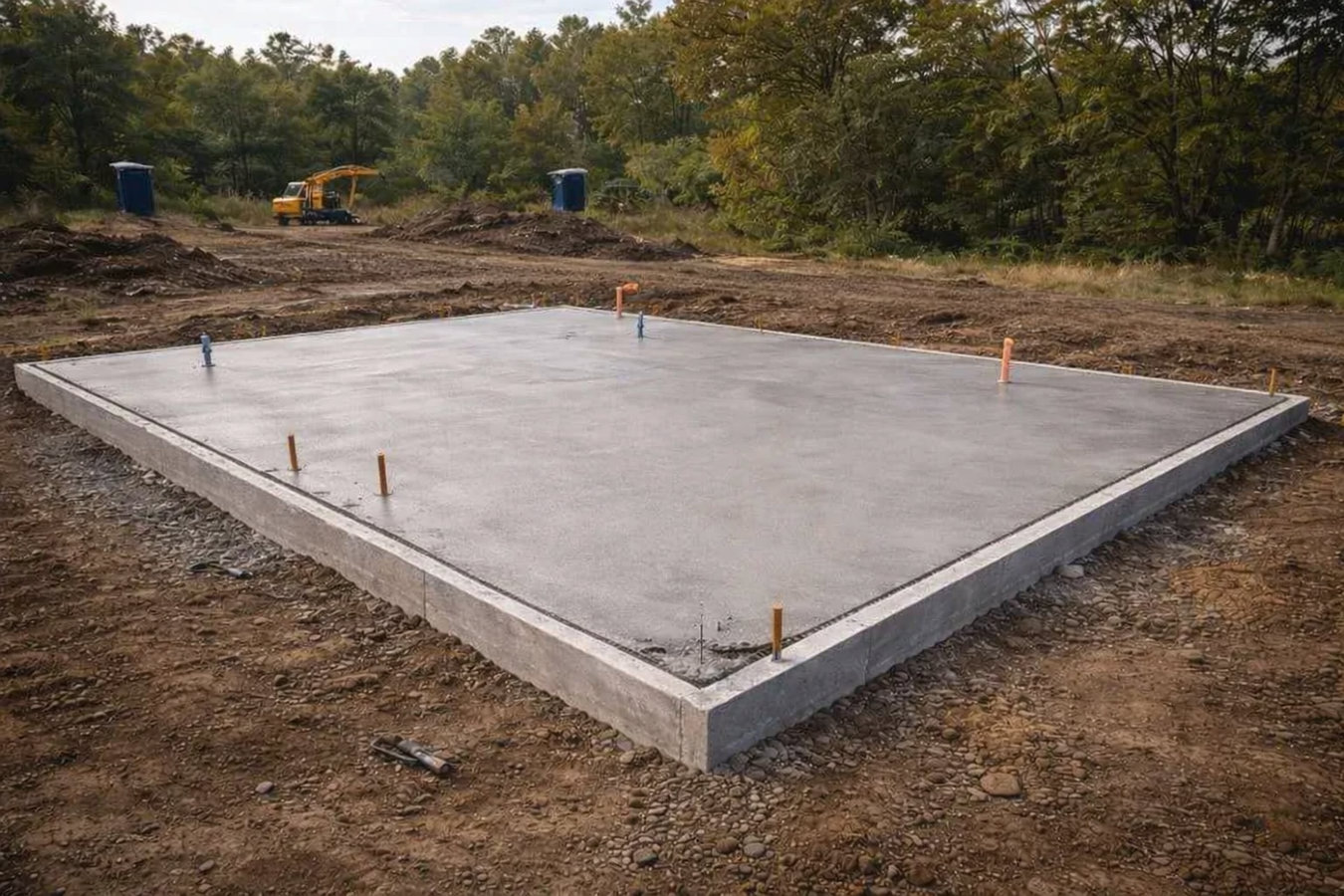
Building a home, ADU, or garage in Hemet starts with the slab. We prepare the ground properly for local clay soils, pull permits, and schedule pours to handle the valley heat.
Slab foundation building in Hemet involves excavating the site, compacting the soil, installing a gravel base and vapor barrier, placing steel reinforcement, passing a city inspection, and pouring the concrete in a single day - most residential slabs take four to eight weeks from permit application to a cured, ready surface.
Most homeowners contact us when they are ready to build a new home, an accessory dwelling unit, or a garage on their Hemet property. California's updated ADU laws have made it easier and more affordable to add a secondary unit to your lot, and a new slab is the required first step before any framing begins. The slab is also where mistakes are the most costly to fix later - a foundation built on improperly prepared clay soil or without the right reinforcement for Hemet's seismic zone will show cracks or settling within a few years, long after the contractor has moved on.
For homeowners also addressing the home's structural framing connections, our foundation installation service covers the full scope of foundation work beyond the slab pour itself.
If you have a lot and are ready to build, a slab foundation is the first step - nothing else can proceed until the slab is poured and inspected. In Hemet, where ADU construction has increased significantly due to California's updated housing laws, many homeowners are discovering they need a new slab for a backyard unit even when their main house is already decades old.
Small hairline cracks are common and usually not structural. But cracks wider than a quarter of an inch, cracks running diagonally across corners, or cracks that appear to be growing are signs of movement in the foundation below. In Hemet, the clay soils that expand and contract with seasonal moisture changes are a common cause of this kind of shifting.
When a slab shifts, the walls above it shift too. If doors that used to swing freely are now dragging on the floor, or window frames show gaps at the corners, the foundation may be moving. This is especially worth investigating in older Hemet homes built in the 1970s and 1980s, when soil preparation standards were less rigorous.
If your floor feels damp, you see water stains on the concrete, or wood and laminate flooring is buckling from below, moisture may be migrating up through the slab. This can happen when a vapor barrier was not installed or has degraded. In Hemet, even in a dry climate, irrigation water and seasonal rains can saturate clay soils and push moisture upward.
We pour slab foundations for new single-family homes, accessory dwelling units, detached garages, workshops, and covered patio structures. Every pour begins with the ground preparation - excavating to the required depth, removing organic material, compacting the subgrade, and laying a gravel drainage base. We then install a polyethylene vapor barrier before any steel goes in, because in Hemet the moisture-blocking step matters even in a dry climate. The steel reinforcement grid is sized and spaced to meet California seismic requirements for Riverside County, and we schedule the pre-pour inspection with the City of Hemet's Building and Safety Division before any concrete is ordered.
For projects that also involve structural concrete below grade - anchor bolts, grade beams, or pier footings - our concrete footings service handles that work alongside the slab scope. Both services can be coordinated in a single permit application to keep your project on schedule.
Fits homeowners building a primary residence on a vacant lot or cleared site, requiring a full permitted slab with engineered footings.
Best for homeowners adding an accessory dwelling unit to an existing property under California's current ADU laws.
Suits homeowners adding a detached garage, storage building, or workshop where a durable, level concrete floor is the priority.
The San Jacinto Valley has two conditions that shape every slab project here. First is the clay-heavy soil that runs through much of the area around Hemet and into neighboring communities. Clay expands when it absorbs water and contracts when it dries, and that cycle puts constant stress on concrete. A slab built on poorly prepared clay soil can develop significant cracks within just a few years - not because the concrete was bad, but because the ground underneath was not properly stabilized before the pour. This is why the prep phase - compacting the subgrade, adding a gravel layer, sometimes bringing in engineered fill - is as important as the pour itself. Homeowners in Murrieta and Perris deal with similar soil conditions throughout the Inland Empire.
Second is Hemet's proximity to the San Jacinto Fault Zone. California's building code requires that foundations in seismically active areas like Riverside County include specific steel reinforcement and footing depths. The permit process enforces these requirements through a required inspection before any concrete is poured - which means you get an independent confirmation that the work meets local seismic standards. Add in Hemet's summer heat, which regularly exceeds 100 degrees and can cause concrete to cure improperly if not managed, and it is clear why working with a contractor who has direct experience in this valley is worth the time it takes to find one.
We respond within 1 business day. Slab pricing depends on the size, the soil conditions on your specific lot, and what the permit requires - so we schedule a site visit before giving you a written number. The visit usually takes 30 to 60 minutes and costs you nothing.
We submit the permit application and construction plans to the City of Hemet's Building and Safety Division. Permit approval typically takes two to four weeks. We keep you updated at each stage so you always know where your project stands.
Once the permit is approved, the crew excavates, compacts, adds the gravel base, installs the vapor barrier, and places the steel reinforcement. In Hemet's clay soils, this prep phase takes one to three days and is the most important work we do.
A city inspector visits to verify the steel and footing setup before any concrete is ordered. The pour happens in a single early-morning session - especially important in summer. The slab cures over 28 days, with framing typically starting after about a week.
We handle permits, soil prep, and the pour - and we respond within 1 business day.
(951) 484-2581We submit the permit application to the City of Hemet's Building and Safety Division before any equipment arrives. A permit on record protects you if you ever sell your home or file an insurance claim - and it means the city inspector confirms the steel and footing work before it is buried under concrete.
Most of the Hemet area sits on expansive clay soils that shift with the seasons. We excavate deeper, compact thoroughly, and install a proper gravel base layer before any forms are built. That ground preparation is what separates a slab that holds for decades from one that develops cracks in year three.
Hemet is located near the San Jacinto Fault Zone - one of the most active fault systems in California. We size and place steel reinforcement to meet California's seismic requirements for this region, and we build to pass the required pre-pour inspection the first time.
Summer temperatures in the San Jacinto Valley routinely exceed 100 degrees, and concrete poured in extreme heat without active management will crack. We schedule pours for early morning, use mixes suited for hot-weather conditions, and keep the slab properly moist during the curing window. You can verify California contractor licensing standards at the California Contractors State License Board.
Every slab we pour in Hemet goes through the same permit-and-inspection process - no shortcuts, no verbal agreements to skip steps. That approach protects your investment and gives you a paper trail that holds up when it matters.
Full foundation installation for new homes and additions in Hemet - site assessment, permits, and construction from the ground up.
Learn moreConcrete footings that anchor walls, posts, and structures to stable ground - sized and reinforced to meet Hemet's seismic and soil requirements.
Learn morePermit season fills up fast in the San Jacinto Valley - reach out now and we will lock in your start date before the schedule closes.